Cervical Pillow for Snoring: Myth or Fact? Guide

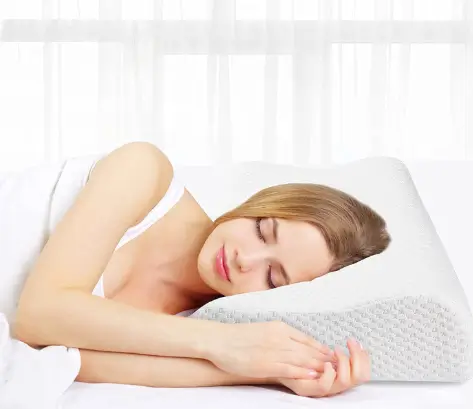
Snoring can disrupt your sleep, your partner’s sleep and your mood the next day. Many look for an easy fix at home and the first thing they try is often a pillow. A snore reduction pillow can help in many cases, especially when snoring has to do with your sleep position and blocked airflow.
Still, it’s not magic. The right pillow works best when you choose the right cervical pillow and use it in the right sleeping position.
How Could Pillows Help?
Much of the logic behind anti-snoring pillows falls into this category:
1) Positioning therapy stopping you from being on your back
Most people block their noses more when they sleep on their backs. Use a pillow as a simple block so you stay on your side. This is medicine. Real medicine. It’s called positional therapy.
2) Head-of-bed elevation / wedge raising your upper body
Raising the elevation can reduce fluid shift toward the neck and reduce airway collapsibility in some people.
In a clinical study, the elevation of the head of bed by 7.5 degrees resulted in a reduction of AHI of about 31.8% on average in patients with predominantly mild-to-moderate obstructive sleep apnea with an improvement in minimum oxygen saturation.
3) Head/neck positioning improvement with cervical alignment pillows
Some pillows are designed to prevent the head as well as neck from falling into positions that make obstruction or snoring worse.
In a study of positional OSA with snoring in Scientific Reports, a head-positioning pillow approach positional therapy improved snoring-related outcomes, and was studied as a positional strategy in that subgroup.
4) Smart pillows that poke you when you snore
They are intended for mild positional correction.
In NIH A pilot study of a smart anti-snore pillow showed improvements in measures of snoring and AHI in mild-to-moderate OSA, but not in severe OSA.
Pillows Can Help Reduce Snoring In Some People
What science says (in practice)
A preliminary randomized study (Frontiers in Medicine) comparing types of pillows during PSG found that a memory foam pillow was associated with a significant reduction in snoring events (~47%) compared to a generic lab pillow in one group.
That’s good news for snoring as a symptom. But that does not mean OSA is automatically cured.
Some people (usually mild-moderate) may have less severe OSA with pillows
A classic crossover trial compared a shoulder-head elevation pillow with CPAP(continuous positive airway pressure) in mild-moderate OSA. The pillow decreased the average AHI (from ~27 to ~21) but CPAP decreased it a lot more (to ~5).
So yes some improvement can be had. But the average effect is less than CPAP.
Positional therapy is effective but not a replacement for CPAP in most patients
Both a Cochrane review summary and an AAFP evidence summary report the same findings:
Positional therapy improves AHI and sleepiness compared with no treatment.
CPAP reduces AHI more than positional therapy but some patients may use positional therapy longer during the night adherence.
Who Benefits The Most From Pillow Therapy?
A pillow strategy makes the most sense if a person has:
- Mild Sleep Apnea, or
- Positional Sleep Apnea much worse on back, or
- Problem snoring and they want a low risk trial.
If a patient’s events are mainly positional, positional therapy tools including cervical pillows may be a second-line or an added option.
See also: Treat Mental Health Nevada: Trusted Mental Health Care for Lasting Recovery
Who Should Not Use A Cervical Pillow?
If you have Don’t let a pillow be the cure
- Moderate-severe obstructive sleep apnea or you strongly suspect it is
- Excessive daytime sleepiness especially while driving
- History of uncontrolled hypertension, heart disease, stroke or atrial fibrillation
- Saw apneas with choking/gasping with morning headache
Cervical Pillows are an add-on for these patients but not the main plan. PAP therapy is strongly recommended in many symptomatic adults and should be based on objective diagnosis and follow-up monitoring.
The viral truth: 5 myths people still believe
Myth 1: An anti-snore cervical pillow cures sleep apnea.
It may help some positional cases. It does not reliably normalize AHI as CPAP can.
Myth 2: If snoring gets better, apnea is gone.
Even if apnea is still present, snoring can be reduced.
Myth 3: More cervical pillows are better.
Excessive neck flexion may aggravate obstruction in some people.
Myth 4: Smart cervical pillows are for everybody.
Mainly there is evidence of benefit in mild-moderate not severe OSA.
How To Try A Cervical Pillow Approach Safely?
If you’re interested in a practical, low-risk home trial:
- Make one change at a time
Head of bed elevation or side sleeping support. Not all at one time.
- Don’t put the cervical pillows only under the head
If some people flex their neck too much and chin to chest they may get more obstruction.
- Raise the upper body
A wedge under the torso is not the same as additional cervical pillows under the head. In the head-of-bed elevation study, the angle was small (7.5 degree).
Follow symptoms for 2 weeks
Reports of snoring, headache in the morning, dry mouth, daytime sleepiness should be administered.
Conclusion
Your sleep position along with shoulder width as well as comfort needs will determine the best choice of cervical pillow. Not everyone likes the same pillow all the time. Pay attention to the fit to get a comfortable sleep.
If you usually sleep on any particular, always check for a contoured cervical neck pillow with enough height to fill the space between your shoulder as well as neck. If you sleep on your back then a medium height cervical pillow with constant neck support is generally preferred.
Select materials that maintain their form as well as feel good in the Indian weather. Look for a washable cover because a clean cervical pillow is better if you suffer from allergies.