Are Your Hands Numb or Painful? Maybe It’s Carpal Tunnel Syndrome

If your hands frequently feel numb, tingly, weak, or painful, you may be experiencing carpal tunnel syndrome. It’s one of the most common nerve disorders in the United States, affecting millions of people every year.
Many people dismiss the early warning signs. They assume their hand “fell asleep” during the night, blame aging, or think they’ve simply overused their hands. The bad news is that carpal tunnel syndrome usually gets worse if left untreated.
The good news is that most people can improve their symptoms without surgery when the condition is recognized early and treated appropriately.
What Is Carpal Tunnel Syndrome?
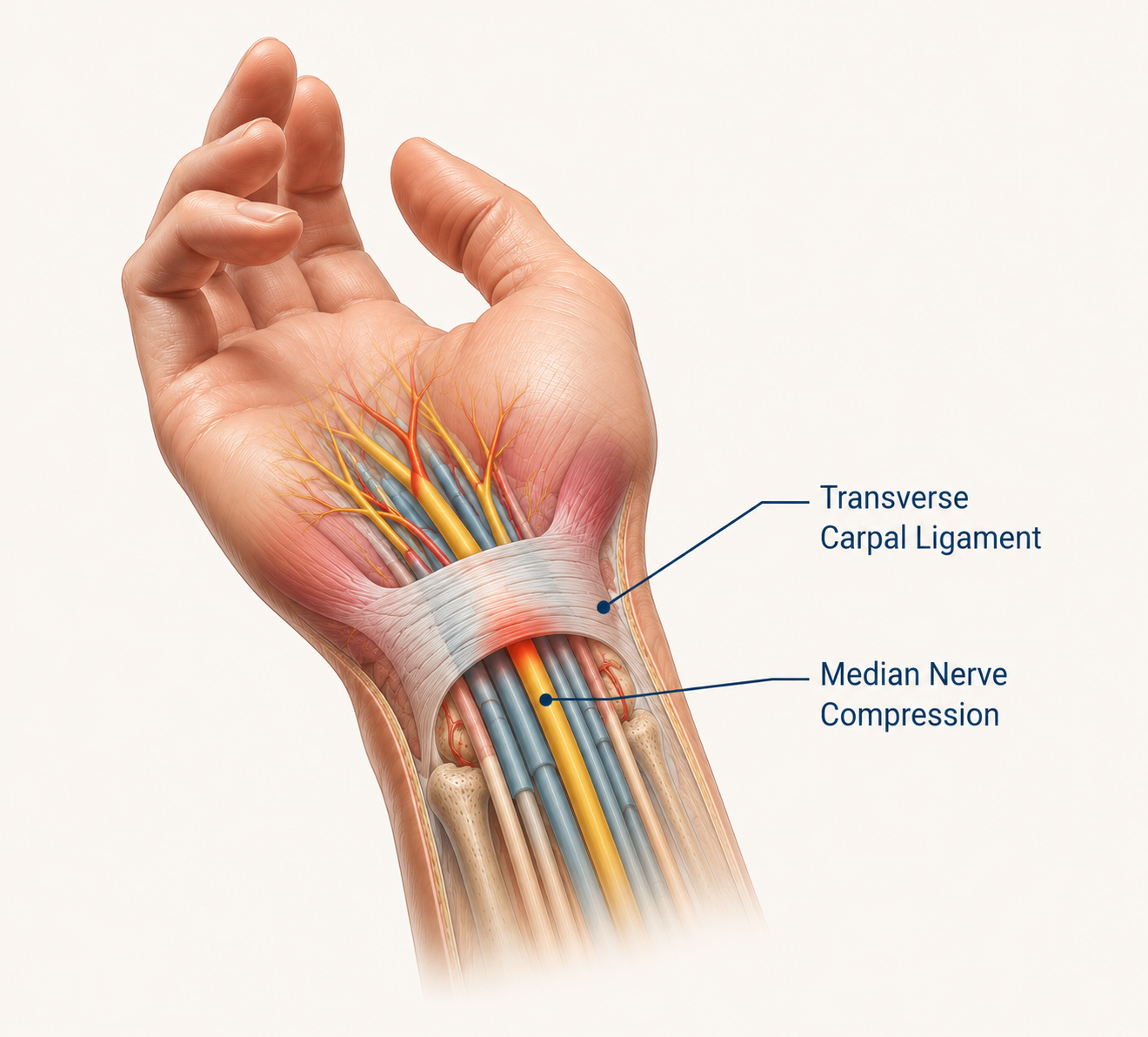
Carpal tunnel syndrome occurs when the median nerve becomes compressed inside the wrist.
The median nerve passes through a narrow passageway called the carpal tunnel. This tunnel contains the median nerve along with several flexor tendons that help move your fingers.
When these tendons become irritated, inflamed, or swollen, pressure builds inside the tunnel. As the pressure increases, the median nerve becomes compressed, leading to the symptoms associated with carpal tunnel syndrome.
Common Symptoms of Carpal Tunnel Syndrome
Symptoms often develop gradually and may come and go at first. Over time, they usually become more frequent and more severe.
Common symptoms include:
- Numbness in the thumb, index finger, middle finger, and part of the ring finger
- Tingling or “pins and needles” sensations
- Pain (dull, sharp, aching, or gnawing) in the fingers or palm
- Burning in the fingers, hand, or wrist
- Nighttime symptoms that wake you from sleep
- Weakness when gripping objects
- Dropping things unexpectedly
- Loss of hand dexterity
- Electric shock sensations that travel into the fingers
Many people first notice symptoms while sleeping, driving, reading, holding a phone, or typing.
As the condition advances, weakness can become a major problem. Simple tasks such as buttoning a shirt, opening a jar, or holding a coffee cup may become difficult.
See also: Maximizing Efficiency With Proper AC Installation Techniques
Who Is Most At Risk?
Carpal tunnel syndrome can affect almost anyone, but some people are more likely to develop it than others.
Risk factors include:
- Repetitive hand and wrist activities
- Frequent keyboard or mouse use
- Assembly-line work
- Hairdressing
- Dental work
- Construction trades
- Manufacturing jobs
- Playing musical instruments
- Pregnancy
- Diabetes
- Obesity
- Rheumatoid arthritis
- Thyroid disorders
- Family history of carpal tunnel syndrome
Women are also affected more often than men, partly because they generally have smaller carpal tunnel anatomy.

It’s important to remember that repetitive activities alone do not always cause carpal tunnel syndrome. Most cases develop from a combination of risk factors over time.
The Best Nonsurgical Treatments
For many patients, surgery is not the first or best option. In fact, the American Academy of Orthopedic Surgeons recommends trying conservative treatment before considering an operation.
The most effective nonsurgical treatments usually work best when combined rather than used individually.
Night Bracing
Nighttime wrist bracing is often one of the first treatments doctors recommend.
A proper carpal tunnel brace keeps the wrist in a neutral position while sleeping. This helps reduce pressure on the median nerve during the night.
Many people unknowingly bend their wrists while sleeping, which increases nerve compression and worsens symptoms.
With nocturnal bracing, most patients commonly notice improvements in:
- Nighttime numbness
- Morning pain or stiffness
- Tingling
- Sleep quality
Activity Modification
Reducing the activities that aggravate symptoms can significantly improve recovery.
This doesn’t necessarily mean stopping work or giving up hobbies entirely. Instead, it often means making small adjustments such as:
- Taking frequent mini-breaks
- Avoiding prolonged wrist bending
- Improving workstation ergonomics
- Using better hand positioning
- Reducing repetitive strain whenever possible
Even modest changes can reduce ongoing irritation inside the carpal tunnel.
Stretching Exercises
Gentle yet targeted stretching exercises help improve tendon mobility and circulation within the wrist and forearm.
Many specialists recommend brief stretching sessions throughout the day, particularly for people who perform repetitive hand activities.
Stretching may help:
- Reduce stiffness
- Improve flexibility
- Enhance circulation
- Promote tendon gliding
- Reduce pressure within the carpal tunnel
Consistency is usually more important than intensity.
Myofascial Release Massage
One of the most overlooked treatments for carpal tunnel syndrome is myofascial release massage.
Unlike a traditional relaxation massage, myofascial release targets restrictions and adhesions within the soft tissues of the wrist and forearm.
The goal is to improve tendon mobility, reduce tissue restrictions, and decrease pressure on the median nerve.
Many therapists believe that restricted tendon movement contributes significantly to the swelling and compression seen in carpal tunnel syndrome.
Potential benefits of myofascial release massage include:
- Reduced tendon restriction
- Improved circulation
- Decreased swelling
- Better tendon gliding
- Reduced nerve compression
- Improved hand function
For best results, treatment is usually performed consistently over several weeks.
Combining Treatments
Many experts recommend combining:
- Night bracing
- Activity modification
- Stretching exercises
- Myofascial release massage
This comprehensive approach often produces better results than relying on a single treatment alone.
The earlier treatment begins, the better the chances of avoiding permanent nerve damage.
When Is Surgery Necessary?
The American Academy of Orthopedic Surgeons generally recommends carpal tunnel surgery as a last resort.
Doctors may recommend surgery when:
- Symptoms are severe
- All conservative treatments have failed
- Thumb muscle wasting (atrophy) develops
- Significant weakness is present
- Nerve testing like EMG shows advanced compression
Carpal tunnel surgery works by cutting the transverse carpal ligament to create more space around the median nerve.
Many patients experience improvement after surgery, but recovery can take weeks or months, depending on several factors. The primary factor is which type of surgery is used.
As with any operation, complications such as infection, scar sensitivity, stiffness, persistent symptoms, or nerve injury can occur.
Because of these risks, most physicians recommend exhausting conservative treatment options first whenever possible.
Don’t Ignore The Warning Signs
The most important thing to remember about carpal tunnel syndrome is that early treatment usually produces the best outcomes.
Many people wait until they begin dropping objects or losing significant hand strength before seeking help. By that point, nerve damage may already be more advanced.
If you frequently experience numbness, tingling, pain, weakness, or nighttime hand symptoms, don’t assume they will disappear on their own.
Recognizing carpal tunnel syndrome early and beginning appropriate treatment may help preserve hand function, reduce symptoms, and potentially avoid surgery altogether.
Summary
Carpal tunnel syndrome occurs when the median nerve becomes compressed inside the wrist, causing numbness, tingling, pain, and weakness. Early treatment with night bracing, stretching exercises, activity modification, and myofascial release massage often improves symptoms and may help avoid surgery. The sooner treatment begins, the better the chance of preventing permanent nerve damage.
About Dr. Maik Zannakis
Dr. Maik Zannakis (“Dr. Z”) is a highly respected medical scientist and leading authority in carpal tunnel syndrome and soft tissue disorders. With more than 40 years of clinical and research experience, he has authored hundreds of peer-reviewed medical publications along with hundreds of in-depth articles focused on the diagnosis and treatment of carpal tunnel syndrome.
As the inventor of the CarpalRx, Dr. Z has pioneered innovative, non-surgical approaches to treating wrist and tendon-related conditions. His work has helped shape modern understanding of carpal tunnel syndrome, particularly in addressing its root causes rather than just symptoms.
Recognized for both his scientific contributions and patient-centered approach, Dr. Z is widely regarded as a trusted expert in the field. His insights, inventions, and personalized treatment strategies have made him a go-to authority for patients seeking effective, long-term relief. Read full Bio
Email: dr.z@carplarx.com
Phone: 800-450-6118