The Camera-Era Wedding Guest: How to Be Memorable Without Becoming the Main Event

Wedding guest style used to be judged mainly in person. An outfit needed to suit the venue, respect the dress code, and remain comfortable through dinner and dancing. Today, it must also survive an unofficial media production.
Professional photographers capture arrivals, ceremonies, speeches, and dance floors. Friends record videos for social media, while group photographs can circulate for years. A dress is seen in sunlight, candlelight, flash photography, and phone screens—often within the same evening.
This has created a new fashion tension. Guests want to look distinctive, but they do not want to appear as though they are competing with the couple. They want an outfit that photographs beautifully, but not one designed only for a single posed image. The real challenge is finding the point between disappearing into the background and becoming an unintended distraction.
The answer is not to dress less confidently. It is to understand how color, texture, silhouette, and movement behave in a highly photographed environment.
Wedding Guest Style Is a Form of Visual Etiquette
Wedding etiquette is often reduced to a list of prohibited choices: avoid white, respect the stated dress code, and do not wear anything inappropriate for the venue. Those rules remain useful, but modern visual etiquette is more nuanced.
A thoughtfully selected outfit should contribute to the atmosphere the couple has created. At a formal estate wedding, a casual sundress may look disconnected from the setting. At a relaxed coastal ceremony, a heavily structured gown could feel theatrical. Being well dressed means participating in the visual language of the event without treating it as a personal photo shoot.
When shopping for formal wedding guest dresses, begin with the ceremony rather than the reception. Consider where guests will sit, how far they may need to walk, what the weather is likely to be, and whether the event will move between indoor and outdoor spaces.
A floor-length silhouette may be perfect for a ballroom but difficult on grass or gravel. A dramatic neckline can look elegant at dinner yet feel exposed during a religious ceremony. The strongest choice respects both the emotional importance of the occasion and the practical reality of attending it.
Choose Recognition, Not Maximum Attention
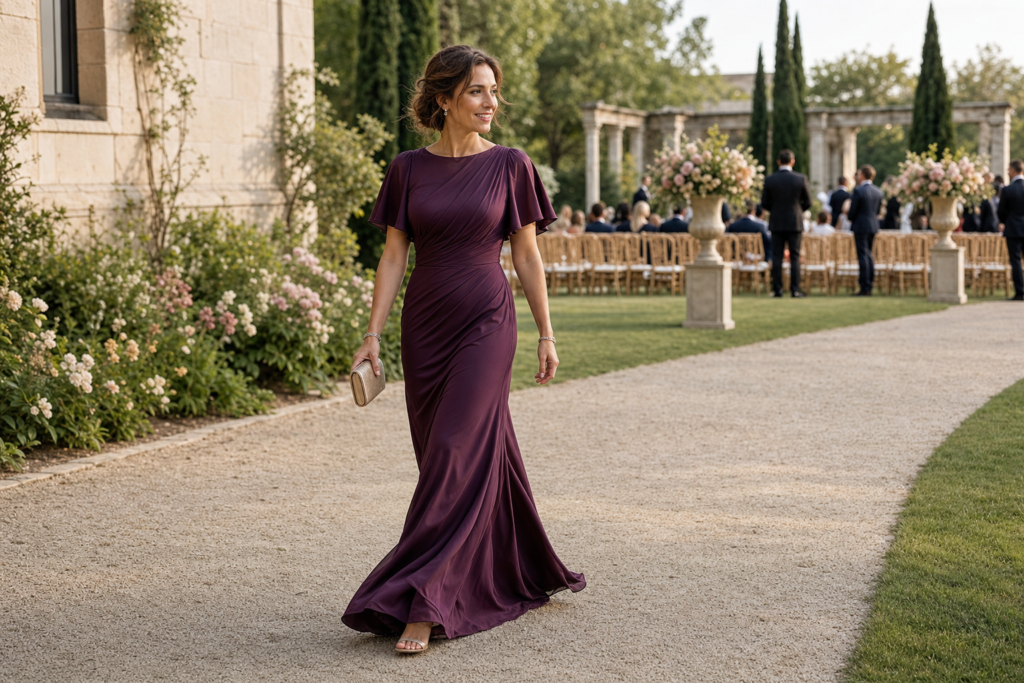
A memorable outfit usually has one clear point of recognition. It could be a sculptural shoulder, an unusual jewel tone, fluid draping, a strong column silhouette, or a beautifully textured fabric. When several dramatic elements appear together, however, the look can begin to compete with the event.
This is why the “one signature” rule works so well for weddings. Select one element to carry the visual identity of the outfit and allow everything else to support it.
If the dress has an architectural silhouette, accessories can remain minimal. If the fabric is richly decorated, simple hair and restrained jewelry create balance. A clean gown can support a distinctive earring or clutch, but it rarely needs both plus statement shoes and an elaborate hairstyle.
Restraint does not make an outfit forgettable. It gives the eye somewhere to focus. In group photographs, a clear silhouette and confident color often create more presence than layers of competing detail.
See also: The Importance of Health in Everyday Life
Think About How Color Behaves Around the Wedding Palette
Guests do not need to match the wedding decorations, but completely ignoring the setting can create unexpected results. A neon dress at a muted garden wedding may dominate every wide photograph. A pale champagne gown may appear white under flash, even if it looks clearly beige in natural light.
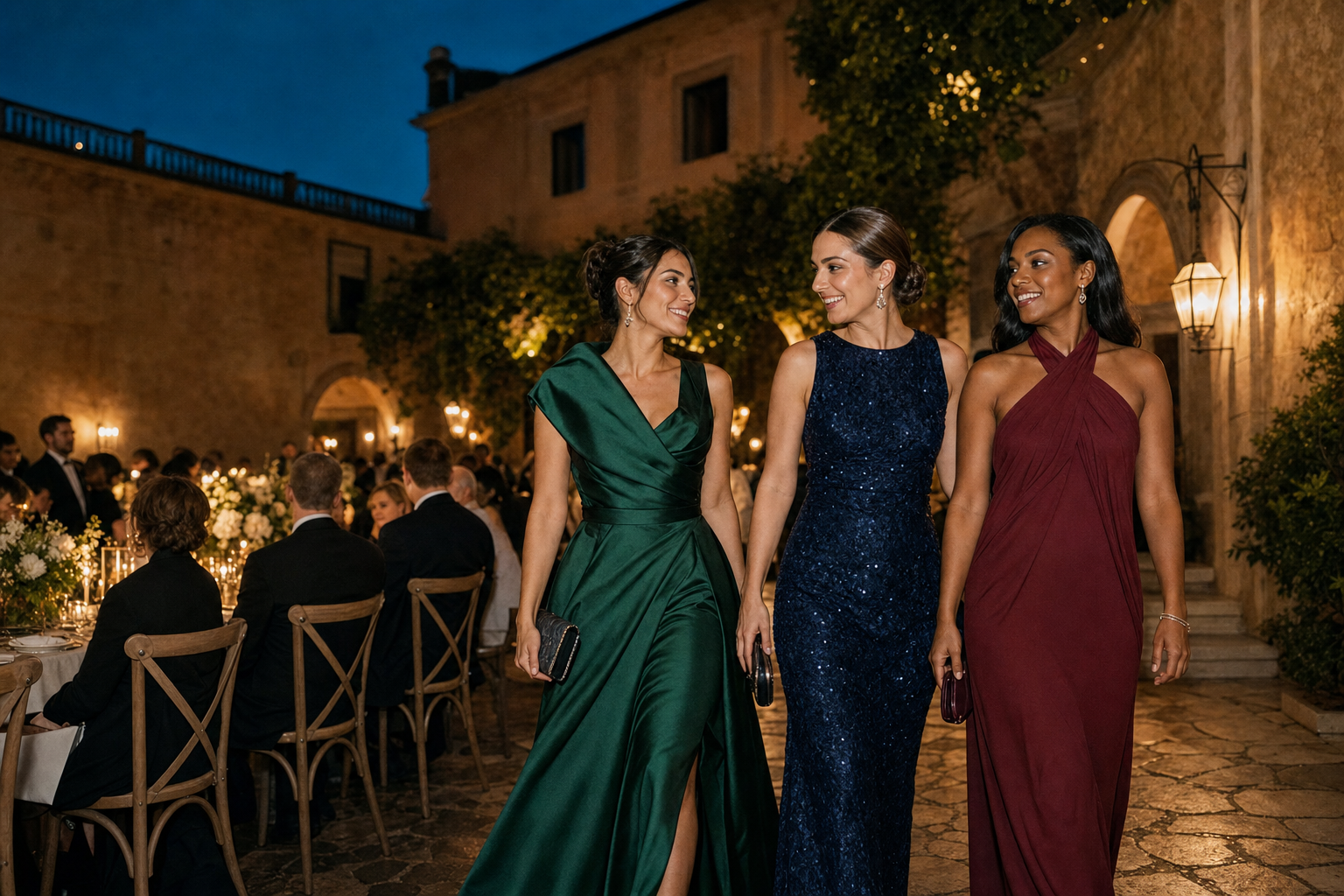
Before choosing a color, consider three environments: the venue, the likely lighting, and the colors associated with the wedding party. Jewel tones are especially reliable for formal occasions because they maintain depth in both daylight and low light. Burgundy, emerald, plum, and midnight blue create distinction without producing the visual intensity of fluorescent shades.
Prints can also work, particularly when their scale matches the formality of the event. Large painterly motifs often feel more sophisticated than tiny daytime prints. The goal is not to blend into the flowers or table linens, but to avoid a color choice that overwhelms every shared image.
When uncertain, photograph the dress with and without flash. The camera may reveal undertones, transparency, or reflectivity that are not obvious in a fitting-room mirror.
Sequins Are Not Automatically Too Much
Sparkle at a wedding is often treated as a risky choice. The fear is understandable: reflective clothing can appear attention-seeking, particularly when combined with a body-conscious silhouette or elaborate accessories. Yet sequins are not inherently inappropriate. Their effect depends on density, color, scale, and context.
A refined sequin dress in midnight blue, deep green, bronze, or black can feel sophisticated at an evening celebration. Fine sequins placed on a clean silhouette produce texture and movement, while large mirrored embellishments create a more theatrical result.
Lighting matters enormously. In daylight, sequins can look sharper and more conspicuous. Under candles or warm reception lights, they create smaller, softer points of reflection. This makes subtle sparkle particularly effective for ceremonies that begin late in the day and transition into dinner and dancing.
The styling should provide contrast. If the dress catches the light, matte shoes, a simple clutch, and minimal jewelry prevent the outfit from becoming visually noisy. Sparkle is most elegant when it is treated as texture rather than as a theme.
Dress for Motion, Not Just the Portrait
Most guests evaluate an outfit while standing still in front of a mirror. Weddings, however, involve constant movement: walking to the ceremony, turning during conversations, sitting through dinner, raising a glass, and dancing.
A dress that looks impressive from the front may behave very differently in motion. A slit may rise higher than expected when seated. A strapless neckline may require repeated adjustment. A long hem can become difficult on stairs, lawns, or crowded dance floors.
Movement also affects photographs. Draped fabric, pleats, and fluid skirts create visual interest as the wearer walks. A well-constructed sleeve can change the outline of the body during conversation. Texture becomes more dimensional when caught by side light.
Testing an outfit should therefore involve more than taking a mirror selfie. Sit down, walk quickly, reach forward, and turn around. If the dress stays secure and maintains its shape, confidence will follow naturally. The camera often captures that comfort more clearly than it captures the garment itself.
The Flash Test Is the New Fitting-Room Test
Phone cameras and professional flashes can transform fabric. Materials that appear opaque may become transparent. Pale colors can wash out, while highly reflective surfaces may create bright patches that obscure the construction of the dress.
A simple flash test at home can prevent surprises. Take photographs from the front, side, and back in a dim room. Check whether undergarments become visible, whether the color changes, and whether embellishments reflect evenly.
This is not about controlling every image. No outfit will look identical under all conditions. The purpose is to understand the garment’s behavior before entering an environment where hundreds of photographs may be taken.
Camera awareness should also guide accessories. Highly reflective jewelry near the face can create distracting points of light, while a metallic clutch may look much brighter under flash than it does in person. When the dress already has visual energy, quieter accessories tend to photograph more harmoniously.
Comfort Is Part of Wedding Etiquette
An uncomfortable guest is rarely a fully present guest. Shoes that prevent walking, a neckline that requires constant checking, or fabric that becomes unbearable in warm weather can shift attention away from the celebration.
Comfort does not mean lowering the level of formality. It means choosing construction intelligently. A defined waist can create polish without restricting movement. A stable neckline can feel glamorous without causing anxiety. A block heel or elegant flat may support better posture after several hours than a shoe selected only for its appearance.
There is also a social dimension to comfort. Guests who feel secure in their clothing are more likely to participate, dance, move between groups, and remain engaged. The best formal outfit supports the experience rather than becoming the main experience.
The Most Photogenic Quality Is Ease
The camera-era wedding has made guests more aware of how they appear, but constant self-monitoring rarely produces the best photographs. Images feel memorable when people are laughing, listening, walking, or reacting naturally—not when they are repeatedly checking their clothes.
That is why the strongest wedding guest look is not necessarily the most elaborate one. It is the outfit that establishes a clear identity and then allows the wearer to forget about it.
Choose a silhouette that belongs in the setting. Use color to create recognition without dominating the frame. Let one detail provide personality, and test how the dress moves and responds to light. If sparkle is part of the look, use it with intention rather than apology.
A wedding guest should not aim to become invisible, nor should she approach the celebration as her own red-carpet event. The ideal outfit occupies the space between those extremes: distinctive, respectful, comfortable, and alive in motion.
Years later, the photographs should not make people ask only, “Who wore that dress?” They should recall the atmosphere of the celebration—and the person in the dress genuinely enjoying it.