What Happens Underneath the Ground When Rain Falls on Concrete vs. Open Earth?

Most people watch rain fall and think about the weather. Engineers watch the same rain and think about where it goes. The difference in perspective matters more than you might expect — because what happens in the first few seconds after a raindrop hits a surface sets off a chain of events that affects groundwater supplies, flood risk, soil health, and even the temperature of your neighborhood.
The contrast between two surfaces tells the whole story.
When rain hits open, vegetated earth, something elegant unfolds. The raindrop is slowed by grass blades and leaf litter before it ever reaches the soil. When it does meet the ground, the upper layers of healthy topsoil — porous, full of organic matter, threaded with root channels and earthworm tunnels — act like a sponge. Water is drawn downward through a process called infiltration, moving through increasingly fine layers of soil until it eventually reaches the water table below. Along the way, the soil filters out sediment, bacteria, and many chemical contaminants. The water that arrives in underground aquifers is cleaner than the water that left the clouds.
Some portion evaporates back into the atmosphere through the soil surface or is drawn up by plant roots and released through leaves — a process called evapotranspiration. This cycle cools the surrounding air, feeds vegetation, and recharges the same groundwater reserves that supply wells and springs miles away.
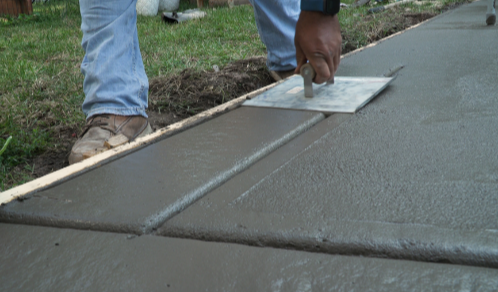
When rain hits concrete or asphalt, none of that happens. The impervious surface gives water nowhere to go except sideways. It gathers speed, picking up oil residue, tire rubber, lawn chemicals, heavy metals, and whatever else has accumulated on the surface. This contaminated sheet of runoff rushes into gutters, storm drains, and eventually into streams and rivers — often faster than those waterways can handle it. The result is the flash flooding that has become a familiar feature of heavily paved urban and suburban areas, even during modest rainstorms.
Below the concrete, meanwhile, the soil is cut off from its water supply. Tree roots starve. Soil compacts. The microorganisms that make healthy earth biologically active gradually die off. After years under an impervious surface, the ground beneath is essentially dead — compacted, dry, and stripped of the structural complexity that makes natural infiltration possible.
The numbers behind this problem are striking. A one-acre parking lot generates roughly sixteen times more runoff than a one-acre meadow during the same rain event. American cities collectively send hundreds of billions of gallons of stormwater into waterways every year — water that could be replenishing aquifers instead of overwhelming sewage systems and carrying pollutants into rivers. Many municipalities now face the expensive reality of upgrading combined sewer systems that were never designed to handle the runoff volumes created by decades of suburban expansion.
This is where surface design becomes a policy question, not just an aesthetic one. Homeowners, developers, and municipalities are increasingly looking at what sits between the sky and the soil as critical infrastructure rather than a decorative choice. The question isn’t just what a driveway or parking area looks like — it’s what it does to the hydrological cycle it sits inside.
Ground-permeable surfaces address this problem directly by restoring the infiltration function that concrete eliminates. A properly installed permeable grass paver system, for instance, provides a load-bearing surface capable of supporting heavy vehicles while still allowing rainfall to pass through the grid and into the soil below. Grass or gravel fill keeps the upper layer open, roots maintain the structure of the subsoil, and the water cycle continues more or less as nature intended.
The soil beneath doesn’t go dormant. It stays biologically active, which means it retains its capacity to filter water and support root systems over time. In dry periods, that same soil holds moisture longer than bare compacted earth, creating a buffer against drought stress for surrounding vegetation.
The urban heat island effect is a related consequence rarely discussed in the context of paving. Dark impervious surfaces absorb solar radiation and re-emit it as heat, raising local temperatures by several degrees compared to surrounding vegetated areas. Surfaces that allow grass to grow or water to evaporate naturally moderate this effect — a quiet but meaningful contribution to neighborhood comfort during the increasingly intense summer heat events that have become standard across North America.
None of this is abstract. It plays out in every heavy rainstorm, every drought, every flooded underpass, and every dry well that drops another foot during a hot summer. The ground beneath our feet is not passive infrastructure — it’s a living system performing constant, invisible work. What we put on top of it determines whether that system continues to function or quietly shuts down, one paved surface at a time.