How Family Dynamics Change After Introducing In-Home Care

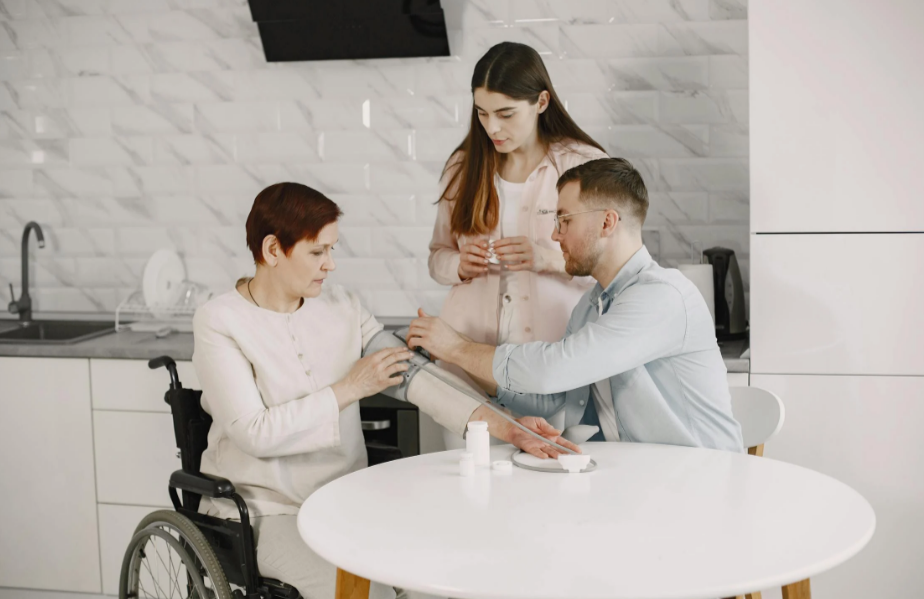
Introducing professional in-home care reshapes family dynamics, shifting the household from a traditional structure to a shared care system. The home, once a private sanctuary, becomes a space where personal life and professional care coexist, requiring new boundaries, roles, and expectations.
A significant 82% of seniors report that they want to stay in their current home for as long as possible rather than moving to a facility. According to a Future Market Insights report, this preference is driving the global home care market to an estimated value of $659.5 billion by 2026. This reflects a massive cultural shift toward care-based household models.
The primary goal of in-home services is the well-being of the senior. The secondary impact, the reorganization of the family ecosystem, is often the most profound hurdle or help for the household, depending on how it is approached.
The Systemic Shift: From Private Sanctuary to Clinical-Social Hybrid
Adapting to a professional care model is a significant life event that requires more than just logistical planning; it requires a psychological shift for the whole family. For years, a family home has operated as a private social sanctuary. When families decide to integrate professional elderly care into the household, the biopsychosocial impact is immediate.
You are not just hiring a pair of hands to help with daily living; you are introducing a third-party witness into a space where dynamics were previously shielded from public view. This shift moves the family from crisis management, where every fall or missed pill is a frantic emergency, to care management.
In this proactive state, the family unit begins to function like a strategic team. However, this transition requires a period of mourning for the privacy lost and an adjustment to the new clinical-social reality. The living room may now house medical equipment, and the kitchen schedule revolves around shift changes.
Evolution of Roles and Identity Hijacking
Family members frequently experience role reversal and “identity hijacking,” where their original personal or professional personas are overshadowed by the constant demands of caregiving tasks. One of the most emotionally jarring shifts is the parent-child reversal.
Adult children often find themselves managing the finances, hygiene, and daily safety of the person who once protected them. This reversal can lead to a sense of “identity hijacking,” where a daughter no longer feels like a daughter, but rather a project manager, a nurse, and a housekeeper combined.
Employed caregivers also report difficulty balancing their careers with caregiving responsibilities. According to the Center for Retirement Research at Boston College, a 2025 NAC and AARP survey found that 56% of employed caregivers have had to take time off, leave early, or arrive late due to caregiving demands.
Outsourcing these specialized responsibilities to qualified professionals allows relatives to shed this task-oriented persona. The introduction of home care serves as a restorative force; it allows the adult child to return to their original relational role.
When a professional handles the complex lifting or the hygiene routines, the family member is free to simply be a son or daughter again, sharing a meal or a conversation without the looming pressure of medical chores. This restoration is essential for maintaining the long-term mental health of both the caregiver and the care recipient.
The Conflict Landscape: Autonomy, Distance, and Finance
Home care acts as a catalyst for latent family friction, particularly regarding the distribution of labor, the sanctity of the home, and the financial allocation of resources. Conflict often centers on the battle for autonomy.
- The senior may view the introduction of a caregiver as a loss of independence, while the children view it as the only way to ensure safety. This friction is a standard part of the adjustment period, but it can escalate if not managed with empathy.
- We see the emergence of the “long-distance sibling syndrome.” Tensions rise when a local sibling handles the daily labor and the logistical grind, while a distant sibling offers unsolicited parachute advice from afar. The local sibling feels burdened and invisible, while the distant sibling may feel guilty or skeptical of the care quality.
- Financial friction adds another layer of complexity. Decisions regarding spending down an inheritance to pay for care can trigger old sibling rivalries or anxiety about the future.
- Finally, the trial-and-error period with staff can cause stress; a caregiver’s personality might clash with the senior’s temperament, or the physical presence of a stranger in the home may feel like an intrusion.
Acknowledging these stressors as common milestones in the process, rather than signs of failure, is the first step toward resolution. Also, in-home care is significantly more affordable than institutional care. According to SeniorLiving.org, monthly costs for in-home care range from $6,481 to $6,677, compared to $9,555 to $10,965 for nursing home care. This cost gap often drives families to choose in-home care, despite the emotional complexity.
Psychological Impact: Stress, Grief, and “Warm” Emotions
Caregiving fits the clinical model for chronic stress, but professional intervention can mitigate anticipatory grief and burnout by providing a necessary psychological buffer.
- Caregivers often live in a state of hyper-vigilance, feeling constantly on duty. This leads to physical exhaustion and emotional depletion. Caregivers averaged 27 hours of care per week in 2025, according to Caregiving in the US, often rivaling part-time work.
- Families also navigate “anticipatory grief”, the process of grieving a loved one’s former self while they are still physically present. This is especially prevalent in cases of cognitive decline or dementia.
- During this time, it is common to experience a dual-emotion spectrum. You may feel warm emotions like deep love and devotion, while simultaneously feeling cold emotions like resentment, anger, or a desperate wish for freedom. Understanding that these conflicting feelings can coexist without making you a bad person is vital for emotional survival.
Professional care is not a luxury; it is a clinical necessity to prevent the primary caregiver from becoming a secondary patient.
Opportunities for Positive Growth and Resilience
Despite the friction, professional home care fosters family resilience by creating a structured decision-making architecture and a shared sense of purpose. When a family is in crisis, decisions are made based on fear or history.
Once a care system is in place, families can implement tools and sessions, such as weekly huddles to discuss ongoing events. This formal communication framework ensures transparency and prevents any one member from feeling isolated in their responsibility.
Professional care also introduces an objective-oriented decision-making architecture. Caregiver logs, vitals tracking, and professional notes, a standard practice for agencies like AmeriBest Home Care, provide data that can settle family arguments. If two siblings disagree on whether their mom is doing okay, the caregiver’s objective record of her appetite, mobility, and mood provides a neutral ground for medical choices.
This process often leads to increased self-efficacy for the family. Members gain new skills in advocacy and medical literacy, and the family as a whole learns to problem-solve in ways they never had to before. Delegating the physical labor to professionals enables families to reclaim the quality time that was previously lost to the stress of chores, leading to renewed connections and meaningful final chapters.
A New Chapter in Family Care
The long-term value of in-home care lies in its ability to restore balance to the family ecosystem. It is a tool that allows the family to move from a state of reactive crisis to one of sustainable, high-quality support. While the shift is complex and often uncomfortable, it preserves the dignity of the elderly and the mental health of the family unit.
Acknowledging the reality of role shifts, addressing spatial and financial conflicts early, and embracing the support of a professional team allow families to navigate this transition successfully.
Our final expert tip: start with a trial care period. Allow the family system two to four weeks to adapt to the new clinical-social hybrid environment. This grace period provides the space needed for the new dynamics to settle into a rhythm that benefits everyone involved.
Frequently Asked Questions
What are the emotional impacts of in-home care on families?
Introducing professional help triggers a complex “dual-emotion spectrum.” While families experience profound relief from reduced physical labor, they often navigate anticipatory grief and guilt. Validating these conflicting feelings is essential to prevent caregiver burnout and ensure the home remains a supportive environment for everyone involved.
How is in-home care different from nursing home care?
In-home care allows seniors to receive personalized, hourly assistance with daily tasks in their own home, promoting independence and comfort. Conversely, nursing homes provide 24/7 on-site professional clinical care and supervision for individuals with complex medical needs. This creates a structured environment that is better for intensive rehabilitation or high-dependency care.
How does in-home care influence family decision-making?
In-home care shifts family decision-making from reactive crisis management to proactive, collaborative planning, often empowering caregivers while requiring them to balance loved ones’ autonomy with safety needs. It fosters shared decision-making with professionals, improves care quality, and reduces immediate pressure for institutionalization.