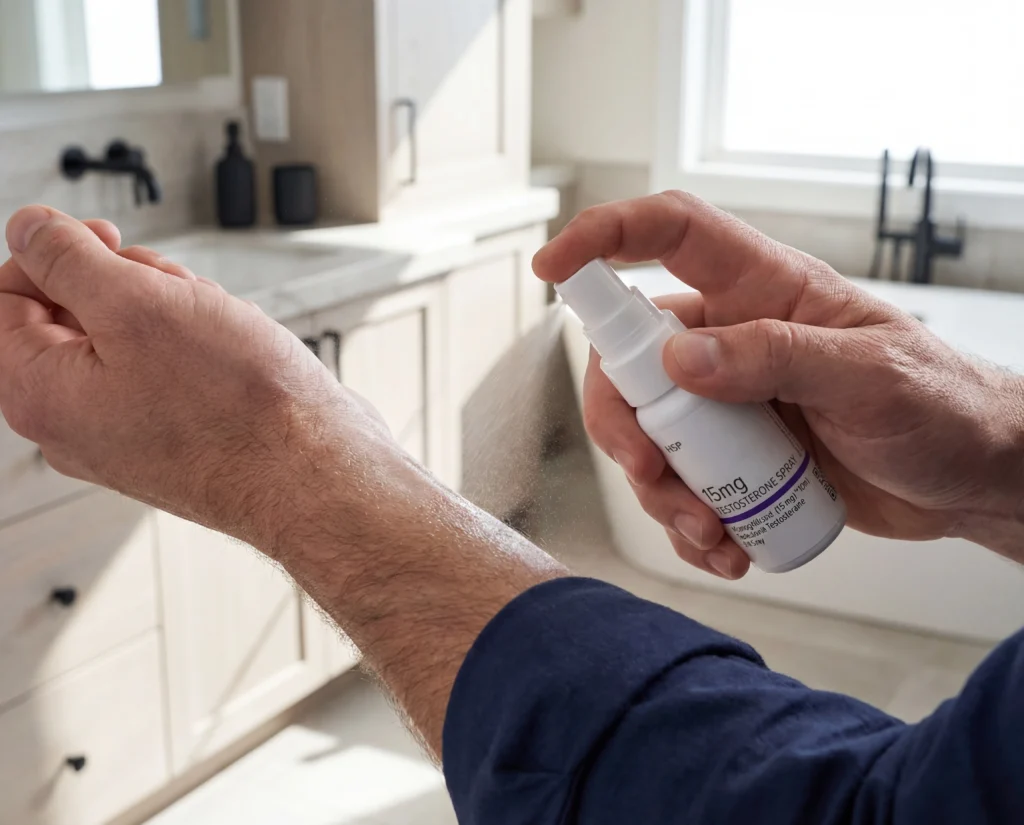
Testosterone Therapy Without Injections: How HypoSpray® Is Expanding Options for Men and Women

For years, testosterone replacement therapy (TRT) has been closely associated with injections. While injectable testosterone remains an established option for eligible patients, advances in transdermal delivery have introduced additional ways to administer testosterone under medical supervision.
One option attracting attention is testosterone HypoSpray®, a needle-free transdermal spray available through ARSYNL Rx, a provider-led telehealth platform offering personalized hormone health services for men and women.
Unlike injectable testosterone, which is administered using a needle, testosterone HypoSpray® is applied directly to the skin. This offers a different delivery format for patients interested in discussing non-injectable testosterone therapy with a licensed medical professional.
As conversations about hormone health expand, understanding the different ways testosterone can be administered is becoming increasingly important.
Why Testosterone Health Matters for Both Men and Women
Testosterone is often considered primarily a male hormone, but it plays a role in the physiology of both sexes.
In men, testosterone contributes to sexual function, muscle maintenance, bone health, and red blood cell production. Clinically low testosterone may be associated with symptoms such as reduced libido, fatigue, or changes in physical function.
However, these symptoms can also result from stress, sleep disorders, medications, and other medical conditions. Testosterone deficiency in men generally requires compatible symptoms and consistently low laboratory measurements before treatment is considered.
Women naturally produce testosterone as well, although at much lower concentrations than men. While women’s testosterone health receives less public attention, it is an important part of certain hormone-related medical conversations.
Current clinical evidence supports considering testosterone therapy for appropriately evaluated postmenopausal women with hypoactive sexual desire disorder (HSDD). Testosterone is not an established general treatment for fatigue, weight management, or aging in women, and blood testosterone levels alone cannot determine whether therapy is necessary.
For both men and women, appropriate evaluation, individualized dosing, and ongoing monitoring remain essential.
What Makes Testosterone HypoSpray® Different?
The distinguishing feature of testosterone HypoSpray® is its delivery format.
Instead of administering testosterone through an injection, patients use a transdermal spray designed to deliver medication through the skin.
Testosterone HypoSpray® is intended for daily application according to a prescribing provider’s instructions. For patients interested in a non-injectable routine, this offers another format to discuss when evaluating their hormone care options.
HypoSpray® uses proprietary transdermal delivery technology developed, owned, and controlled by TDSC / HypoSpray Pharma. ARSYNL Rx provides access to the testosterone formulation through its provider-guided telehealth platform.
The spray format is particularly relevant to discussions about patient preferences. Some individuals are comfortable with injections, while others prefer to avoid needles or discuss medication formats that fit into a daily routine.
Neither format is universally superior. Differences in administration, absorption, dosing, potential adverse effects, and monitoring requirements should be evaluated by a medical professional.
Importantly, the availability of a transdermal option does not eliminate the need for clinical oversight. Providers must still evaluate whether testosterone therapy is appropriate and monitor the patient’s response.
A Different Conversation Around Women’s Testosterone Therapy
Although testosterone therapy is commonly associated with men’s health, its potential role in women’s care deserves thoughtful discussion.
Women experiencing sexual health concerns may not immediately consider testosterone as something worth discussing with their healthcare provider. However, certain clinical situations warrant a broader hormone evaluation.
For appropriately selected women, particularly postmenopausal patients with clinically diagnosed HSDD, a provider may consider testosterone therapy after reviewing symptoms, health history, other contributing factors, and available treatment options.
Women generally require substantially lower testosterone exposure than men, making appropriate prescribing and monitoring especially important. Testosterone therapy for women is also an off-label consideration in the United States, where no testosterone product is FDA-approved specifically for female use.
Potential adverse effects, including acne, increased facial hair, and voice changes, must be discussed, along with uncertainties regarding long-term safety.
ARSYNL Rx recognizes the importance of making medically appropriate hormone conversations accessible to women as well as men. Its telehealth model gives eligible adults an opportunity to discuss testosterone-related concerns with licensed providers and learn whether treatment warrants consideration.
Why Medical Oversight Still Matters
Whether testosterone is administered through an injection, gel, or transdermal spray, treatment should begin with a comprehensive medical evaluation.
A provider may review symptoms, relevant laboratory results, medical history, current medications, fertility plans, and potential contraindications before making a prescribing decision.
Monitoring is equally important after treatment begins. Testosterone therapy can have adverse effects, and topical formulations also require precautions to help prevent unintended medication transfer to other people through skin contact.
For women, clinical assessment and careful monitoring are especially important because testosterone exposure must remain appropriate for the individual, and not every hormone-related concern is an indication for treatment.
ARSYNL Rx emphasizes a provider-guided process rather than encouraging patients to select testosterone therapy based on convenience alone.
Exploring Needle-Free Testosterone Therapy Through ARSYNL Rx
As healthcare becomes more personalized, patients increasingly want to understand not only which medical options may be appropriate, but also how those options are administered.
ARSYNL Rx offers eligible patients access to testosterone HypoSpray® therapy through a telehealth model that includes medical evaluation and provider oversight.
The needle-free format introduces another consideration for people exploring testosterone-related care. It does not replace injectable therapy or establish that one delivery method is more effective than another. Instead, it expands the discussion around administration preferences and individualized treatment planning.
For both men and women, the most important consideration remains whether testosterone therapy is clinically appropriate in the first place.
As hormone health conversations become more inclusive, options such as testosterone HypoSpray® illustrate how different delivery formats can be incorporated into provider-guided care.
About ARSYNL Rx
ARSYNL Rx is a provider-led telehealth platform offering personalized healthcare options for men and women, including hormone health, weight management, hair loss, sexual health, and wellness services. Its approach emphasizes confidential consultations, individualized medical evaluation, and licensed provider oversight.
Medical Disclaimer: This article is for informational purposes only and is not medical advice. Testosterone HypoSpray® is a compounded prescription option and is not FDA-approved. Testosterone therapy is not appropriate for everyone. The safety and effectiveness of the specific HypoSpray® formulation have not been established through FDA approval. Treatment eligibility, dosing, risks, and monitoring must be determined by a licensed medical professional. Individual experiences may vary.