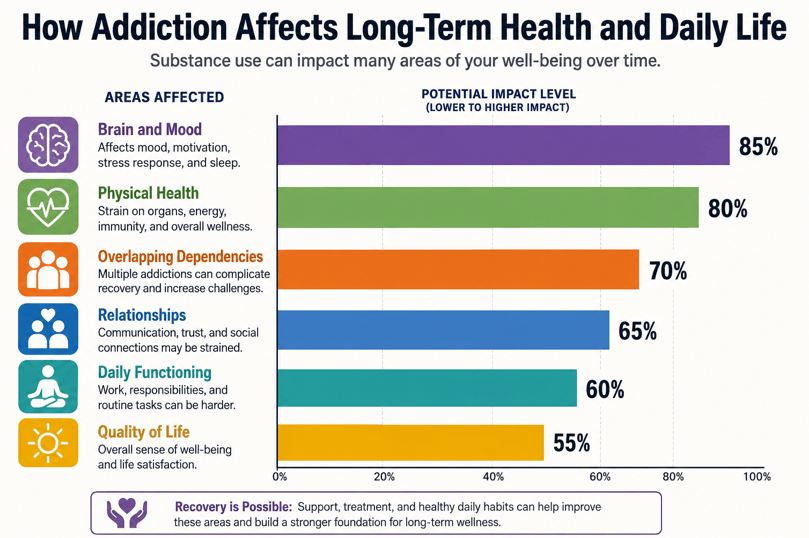
5 Ways Addiction Can Affect Long-Term Health and Daily Life

Addiction can affect nearly every part of a person’s life, from sleep patterns and stress levels to relationships, work performance, and physical wellness. The effects may build gradually, which is one reason many people do not recognize how much strain their bodies and minds are under until daily routines start feeling harder to manage. While every situation looks different, many healthcare professionals encourage early support because long-term substance use may place pressure on the brain, heart, digestive system, and emotional well-being.
Conversations around addiction have also changed in recent years. More people now speak openly about mental health, recovery, and the reality that support is rarely one-size-fits-all. Some individuals benefit from therapy, some prefer community support groups, and others look for structured treatment environments that help remove outside stressors while they focus on healing.
The Brain and Mood
Substances can influence how the brain handles dopamine, stress responses, motivation, and emotional regulation. Over time, some people notice that activities they once enjoyed begin to feel less rewarding. Sleep may become inconsistent, concentration may feel harder to maintain, and emotional highs and lows can feel more intense than before.
Mental health can also become more complicated when substance use overlaps with anxiety, depression, unresolved trauma, or chronic stress. This does not mean everyone will experience severe symptoms, but healthcare professionals often discuss how emotional wellness and substance use can affect each other in ways that are difficult to separate.
Stress itself can add another layer. When someone already feels overwhelmed, substances may begin to feel tied to relaxation, social comfort, or emotional escape. That pattern can slowly become harder to break, especially when healthy coping habits have fallen out of the picture.
The systemic damage caused by substance dependence often extends to the respiratory and renal systems, where the physiological strain becomes increasingly difficult to manage. For instance, chronic use can lead to significant pulmonary issues or progressive kidney dysfunction as the body struggles to filter out persistent toxins. Individuals seeking to better understand these complex biological interactions may click here to find comprehensive resources on managing the multifaceted health consequences of long-term use. By addressing these physical complications early, it becomes possible to mitigate some of the most severe risks, such as cardiovascular events or permanent neurological changes, which frequently compromise a person’s overall quality of life and long-term vitality.
Physical Strain
The body tends to keep score, even when symptoms seem manageable at first. Some people experience changes in appetite, digestion, energy levels, hydration, or immune function. Others notice headaches, disrupted sleep, increased tension, or ongoing fatigue that never fully goes away.
Alcohol, opioids, stimulants, and other substances can affect the body differently, but many healthcare discussions focus on the cumulative strain repeated use may place on major organs and overall wellness. Recovery conversations often include nutrition, hydration, movement, and sleep because rebuilding physical stability matters just as much as emotional support.
For many people, treatment also becomes more accessible once they realize there are multiple paths forward. Rehabs in Charleston WV, 12-step meetings in Charlottesville VA or sober living homes in Los Angeles CA, there are options that meet you where you’re at in your sobriety journey. That flexibility matters because people respond to support in different ways, and what works for one person may not feel right for another.
Overlapping Dependencies
One challenge that healthcare providers often discuss is dealing with multiple addictions at the same time. A person may struggle with alcohol while also relying heavily on nicotine, prescription medication, gambling, or other compulsive behaviors. In some situations, one issue can mask another, which may delay treatment or make recovery feel more overwhelming.
This overlap can also complicate emotional recovery. Someone trying to stop one habit may unintentionally lean harder into another coping mechanism without realizing it. That is one reason many treatment programs focus on behavioral patterns, stress management, and emotional regulation alongside physical recovery.
Support systems can play a major role here. Friends, family members, therapists, recovery groups, and structured treatment environments may help reduce isolation and create accountability during difficult periods. Many people describe recovery as less about perfection and more about building routines that feel sustainable over time.
See also: The Importance of Health in Everyday Life
Relationships and Isolation
Addiction can place pressure on relationships in ways that are not always obvious at first. Communication may become strained, responsibilities may start slipping, or emotional distance can grow over time. Some people withdraw socially because they feel ashamed, defensive, or exhausted. Others may continue showing up outwardly while struggling internally in private.
Isolation tends to make emotional stress heavier. Without support, it becomes easier for unhealthy routines to repeat themselves. That cycle can be difficult because loneliness itself may increase emotional vulnerability.
At the same time, rebuilding relationships usually takes patience. Trust rarely returns overnight. Many recovery specialists encourage focusing on consistency rather than grand gestures because stability often speaks louder than promises. Small daily habits, showing up on time, maintaining routines, and practicing honesty can gradually help repair strained connections.
Recovery and Daily Health
Recovery conversations often focus on dramatic turning points, but daily health habits matter too. Sleep quality, hydration, balanced meals, physical movement, therapy, and stress management can all support the recovery process. Some people begin with structured treatment. Others start by attending meetings, speaking with healthcare providers, or reconnecting with supportive people in their lives.
There is also growing awareness that recovery may not look identical for everyone. One person may prefer inpatient care, while another benefits more from outpatient counseling and community support. The important part is finding a plan that feels realistic enough to maintain beyond the first few weeks.
Healthcare providers frequently encourage people to seek support earlier rather than waiting for a crisis point. That does not mean every concern automatically signals severe addiction, but paying attention to patterns can make a meaningful difference over time.
Addiction can affect emotional wellness, physical health, relationships, and daily stability in ways that build gradually over time. Recovery often starts with recognizing those patterns and finding support that fits the individual, not forcing every person into the exact same path.