Matching a Turntable Phono Preamp to Your Turntable

A turntable phono preamp does not work in isolation. It is one link in a chain that runs from the stylus in the groove to the speakers in your room, and it sounds its best when it matches the turntable it serves. A well-matched phono preamp brings out the strengths of your deck, while a poorly matched one can hold it back. This guide explains how to match a phono preamp to your turntable, so every part of the system works together.
Start With the Cartridge
The cartridge is the starting point for matching, because it decides the gain and loading your phono preamp must provide. Moving magnet cartridges are fitted to most affordable and mid-range turntables, and they need moderate gain, usually around 40 decibels. Moving coil cartridges, found on higher-end turntables, need far more gain, typically 60 decibels or more, along with careful loading.
Check which cartridge your turntable uses before you shop. If you buy a phono preamp that cannot provide enough gain for your cartridge, your records will sound quiet and lifeless. If you buy one with far too much gain, the sound will distort. Matching the gain to the cartridge is the first and most important step.
Consider the Turntable’s Quality
the turntable phono preamp should suit the quality of the turntable it joins. An entry-level turntable with a basic cartridge will not reveal the finer qualities of a very expensive phono preamp, so spending heavily on the phono stage is poor value. Equally, a well-engineered turntable with a good cartridge deserves a phono preamp that can keep up, because a cheap phono stage will hide the detail the turntable is capable of retrieving.
A sensible guide is to spend roughly the same on the turntable phono preamp as you spent on the cartridge, or a little less. As your turntable improves over time, you can upgrade the turntable phono preamp to match, and the improvement will be clearly audible.
Tonearm and Cartridge Compatibility
The tonearm and cartridge work as a pair, and the turntable phono preamp must suit both. A low-output moving coil cartridge on a high-quality tonearm needs a phono preamp with high gain and precise loading adjustment. A moving magnet cartridge on a standard tonearm is far less demanding, and almost any good phono preamp will serve it well.
Loading is the electrical resistance and capacitance the turntable phono preamp presents to the cartridge, and it affects the frequency response. Most moving magnet cartridges are happy with the standard loading that affordable phono preamps provide. Moving coil cartridges are more sensitive, and a phono preamp with adjustable loading lets you fine-tune the sound. If your turntable uses a moving coil cartridge, adjustable loading is a feature worth paying for.
Built-In Stages and When to Move On
Many turntables include a built-in phono preamp, and many amplifiers include a phono input. These are convenient, and they are a good place to start. But they are usually built to a budget, sharing space and power with other circuits, and they can be the weakest part of an otherwise good system.
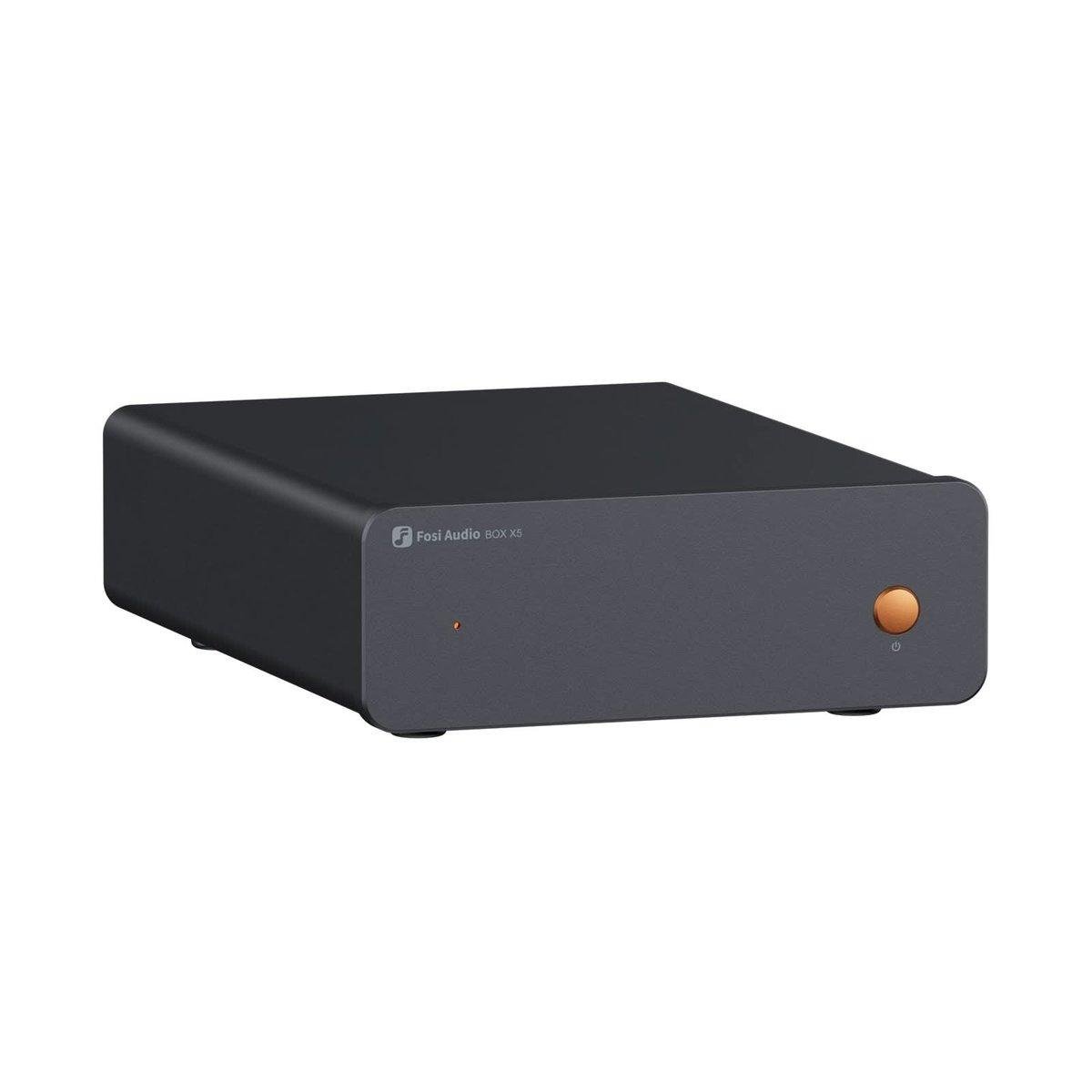
If your turntable is a well-regarded model with a good cartridge, a separate turntable phono preamp is often the most cost-effective upgrade you can make. It gives the cartridge signal a dedicated, quiet circuit, and the improvement in clarity, bass and background silence is usually obvious. The turntable you already own may be capable of far more than its built-in stage allows it to show.
Cables and Placement
Matching is not only about electronics. The cable between the turntable and the turntable phono preamp carries a very weak signal, so keep it short and route it away from mains leads. Place the turntable phono preamp close to the turntable, on a stable shelf, and away from power supplies and transformers. These simple steps protect the fragile signal and let the turntable phono preamp do its job properly.
You do not need expensive cables.
5 Steps to a Well-Matched Setup
- Identify your cartridge: moving magnet or moving coil, and note its output level.
- Match the gain: choose a phono preamp that provides the right gain for your cartridge.
- Balance the budget: spend in line with the quality of your turntable and cartridge.
- Check the loading: adjustable loading matters most for moving coil cartridges.
- Keep the setup tidy: short cables, a firm ground connection and a quiet location.
Planning Future Upgrades
A good phono preamp can stay with you through several upgrades. If you choose a model that supports both moving magnet and moving coil cartridges, with switchable gain and adjustable loading, it will still be useful if you change your cartridge or move to a better turntable later. That flexibility makes it a smarter long-term purchase than a model that only suits your current cartridge.
Think of the turntable phono preamp as a long-term part of your system rather than a one-off purchase.
Frequently Asked Questions
Should the turntable phono preamp cost as much as the turntable?
Not necessarily. A good guide is to match it to the cartridge rather than the turntable. In most systems, a phono preamp costing a similar amount to the cartridge is a sensible balance.
Can I use the same phono preamp if I change my turntable?
Yes, in most cases. As long as the new turntable uses a cartridge type the phono preamp supports, it will work. A model with switchable MM and MC settings is the most flexible choice.
Does the amplifier matter for matching?
The amplifier matters less, because the phono preamp connects to a standard line input. Any amplifier with a spare line input will work, and the phono preamp does not need to match the amplifier brand.
See also: How Innovative Physiotherapy Techniques Improve Pain Management
Final Thoughts
Matching a turntable phono preamp to your turntable is about balance. Start with the cartridge, choose the right gain and loading, and spend in line with the quality of the rest of your system. A well-matched phono preamp lets your turntable show what it can really do, and it stays useful as your system grows. Get the match right, and every record you play will sound fuller, clearer and more alive.