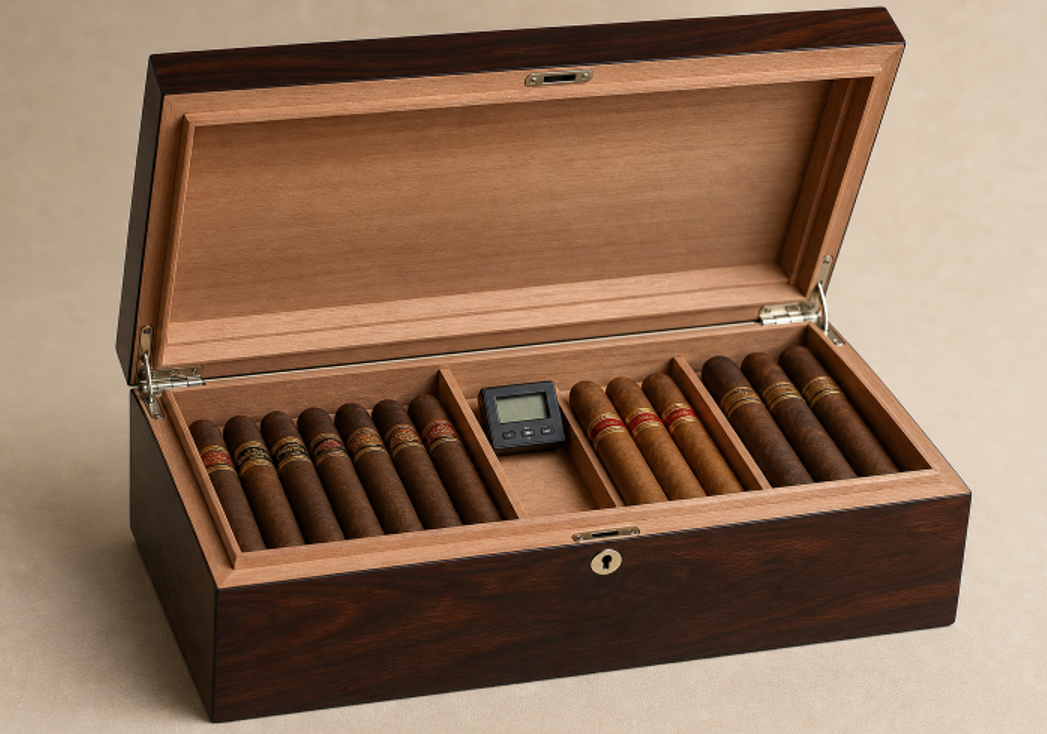
How to Build a Stable Home Cigar Storage Routine

Key Takeaways
- Stable storage conditions matter more than chasing one exact humidity reading.
- A suitable location, dependable seal, and accurate monitor are the foundation of good cigar care.
- Small weekly checks can catch problems before they affect wrappers, draw, flavor, or burn.
- Heating, air conditioning, and seasonal weather can change indoor storage conditions.
- Limit unnecessary openings and make adjustments gradually.
Keeping cigars in good condition at home is less about constant adjustment and more about creating a steady environment. Whether you use a traditional humidor, an airtight container, or an electronic cigar humidifier, the most useful goal is simple: protect your collection from sudden shifts in humidity, temperature, and airflow.
A reliable routine also removes much of the guesswork from cigar ownership. Instead of reacting to every small number change, you can watch for patterns, protect your cigars during seasonal changes, and enjoy the collection without constantly disturbing it.
Why Stable Storage Matters
Cigars are made from natural tobacco leaves, so they react to the moisture in the surrounding air. If conditions become too dry, wrappers can crack, and the tobacco may burn hot or taste harsh. If conditions become too damp, cigars may feel soft, draw poorly, or develop unwanted odors. A humidor is designed to maintain controlled humidity, but its performance still depends on where it is placed and how it is maintained.
Short-term changes are not always a crisis. The larger concern is repeated fluctuation. A collection that moves from overly dry to overly damp conditions can take time to recover, even after the storage environment becomes stable again.
See also: How Innovative Physiotherapy Techniques Improve Pain Management
Set a Sensible Humidity Range
Relative humidity measures how much moisture is in the air compared with the maximum amount the air can hold at a given temperature. Many cigar owners prefer a moderate range rather than trying to maintain a single perfect number every hour of the day. Your preferred setting may depend on the cigars you own, how long you plan to store them, and how tightly your container seals.
- Choose a realistic target range and give the setup time to settle.
- Wait before making another adjustment, especially after adding moisture.
- Respond to repeated swings, not one unusual reading.
- Keep notes during the first few weeks so you can identify trends.
Keep Temperature Under Control
Temperature affects both the cigars and the storage system. A consistently moderate indoor temperature is usually easier to manage than a space that gets hot during the day and cool at night. Keep cigar storage away from direct sunlight, radiators, heating vents, air-conditioning vents, exterior doors, and damp basements.
Heat can make humidity control harder and may strain the moisture source inside the container. Cold conditions can slow changes, but they do not correct an unstable humidity level. Aim for a room that stays comfortable and avoids sharp daily swings.
Choose the Right Location at Home
A quiet interior shelf, cabinet, or closet is often a better option than a kitchen counter or sunny windowsill. Before deciding on a permanent spot, observe the room during the warmest and coolest parts of the day.
- Check for nearby windows, vents, heaters, and exterior walls.
- Place the storage unit on a level, secure surface.
- Leave enough room to open and inspect it comfortably.
- Avoid areas where strong cooking smells, smoke, or fragrances may linger.
Prepare New Storage Before Adding Cigars
New wooden humidors and other storage systems may need time to reach a stable internal condition before they are filled. Follow the manufacturer’s preparation instructions and use only the recommended humidification material or moisture source. Rushing this stage can lead to unstable readings that last much longer than expected.
Give the empty setup several days to settle, then confirm that humidity and temperature remain reasonably consistent. Once the environment is stable, add cigars gradually rather than packing every available space at once.
Use a Reliable Monitoring Tool
A hygrometer measures relative humidity, and a digital model can make regular checks easier. Accuracy matters because a monitor that reads incorrectly can lead to unnecessary adjustments. Test or calibrate the device according to its instructions, particularly when readings seem unusually slow, inconsistent, or different from those of another monitor.
- Place the sensor where it reflects the main storage area.
- Do not press it against a wall or directly beside the moisture source.
- Check at roughly the same time each day during the first week.
- Record changes after refilling the humidity source or adding cigars.
Build a Simple Weekly Care Routine
Once the storage environment is settled, care should take only a few minutes each week. A repeatable checklist is more useful than frequent, random tinkering.
- Read the humidity and temperature.
- Check cigars for dry wrappers, unusual softness, or visible moisture.
- Confirm that the lid, gasket, or seal closes properly.
- Inspect the humidification source without overfilling it.
- Write down anything that may explain a new reading, such as a room-temperature change or frequent opening.
Adjust for Seasonal Weather
Winter heating can dry indoor air, while summer humidity and air conditioning can create different challenges. A storage routine that works well in mild weather may need closer attention during extreme conditions. Make changes slowly, and allow time for the storage environment to respond before adding more moisture or moving the collection.
Know the Signs of Too Much or Too Little Moisture
No single symptom confirms a storage problem, but several signs can point to one. Very dry cigars may have brittle wrappers, loose tobacco, a fast burn, or harsh smoke. Overly damp cigars can feel spongy, burn unevenly, draw with difficulty, or carry a musty odor. If only cigars in one part of the container seem affected, check for uneven airflow or a poorly placed humidity source.
Avoid Common Storage Mistakes
- Opening the storage container repeatedly without a reason.
- Adding cigars before a new setup has stabilized.
- Using tap water when distilled water is recommended.
- Overcrowding the space and limiting airflow.
- Trusting one monitor without checking its accuracy.
- Keeping cigars near sunlight, heat, or strong household odors.
- Changing the location, humidity source, and target level all at once.
Compare Common Storage Options
The best storage option depends on the collection size and how often the cigars travel. A desktop humidor works well for a small home collection when it has a dependable seal. An airtight container can be a practical, low-cost, or backup choice, provided humidity is monitored carefully. Travel cases are useful for short trips but have limited capacity. Larger cabinet systems suit bigger collections, although they require more space, organization, and regular inspection.
Make Room for Aging and Rotation
The organization protects cigars from unnecessary handling. Mark purchase dates, separate different sizes or styles, and keep cigars intended for near-term smoking within easy reach. For a small collection, one section can hold cigars planned for the next few weeks while another holds cigars you want to age longer. This simple rotation system makes it easier to monitor what you have and reduces unnecessary opening.
Frequently Asked Questions
How Often Should a Humidor Be Checked?
New setups deserve daily attention during the first week. Once readings are stable, a weekly check is enough for many home collections.
Is One Humidity Number Best for Every Cigar?
No. Storage length, local climate, container design, and personal preference can all influence the target. Consistency remains the most important factor.
What Should Be Done If Readings Change Suddenly?
Check the seal, monitor, room conditions, recent openings, and humidity source before making a major change. A measured response is safer than adding excessive moisture immediately.
Conclusion
A dependable cigar storage routine does not need to be complicated. Start with a stable location, sensible humidity control, accurate monitoring, and a brief weekly check. With those habits in place, your collection is more likely to remain protected, organized, and ready to enjoy.