The Hidden Impact of Missing Teeth: How Dental Implants Can Support Better Oral Care and Everyday Confidence

A smile is often considered one of the most recognisable expressions of confidence, warmth and personality. Yet beneath its appearance lies a complex system that supports eating, speaking, facial structure and long-term oral health. When a tooth is lost, the consequences can extend well beyond the visible gap. Changes in chewing habits, shifting teeth and concerns about appearance can gradually influence everyday life in ways that are not always immediately obvious.
For many people, missing teeth can be devastating, particularly when tooth loss affects their ability to enjoy food, communicate comfortably or feel at ease in social situations. Although the emotional impact of tooth loss is often overlooked, modern dentistry offers solutions that address both functional and aesthetic concerns. Among these options, dental implants provide a way to replace missing teeth while supporting the structures that help maintain a healthy, natural-looking smile.
The Wider Consequences of Tooth Loss
Losing a tooth may initially seem like a localised problem. Perhaps it is hidden when smiling, or the remaining teeth appear sufficient for everyday chewing. However, the mouth functions as an interconnected system, and even a single missing tooth can influence how that system operates.
One of the most immediate effects is a change in chewing efficiency. Teeth work together to break down food, and a gap may encourage a person to favour one side of the mouth. Over time, this altered chewing pattern can place additional stress on certain teeth or contribute to uneven wear.
Tooth loss can also affect speech. Particular sounds depend on precise interactions between the tongue, teeth and lips. Missing front teeth, for example, may influence the pronunciation of certain words, although the extent of the change varies from person to person.
Another important consideration is the relationship between teeth and the surrounding bone. The roots of natural teeth stimulate the jawbone during normal biting and chewing. Following tooth loss, the bone in that area may gradually resorb because it no longer receives the same mechanical stimulation. This process can affect the shape of the gum and jaw over time.
These changes do not necessarily occur at the same rate in everyone. Nevertheless, they demonstrate why replacing a missing tooth is not simply a matter of restoring appearance.
See also: How Innovative Physiotherapy Techniques Improve Pain Management
How Dental Implants Support Tooth Replacement
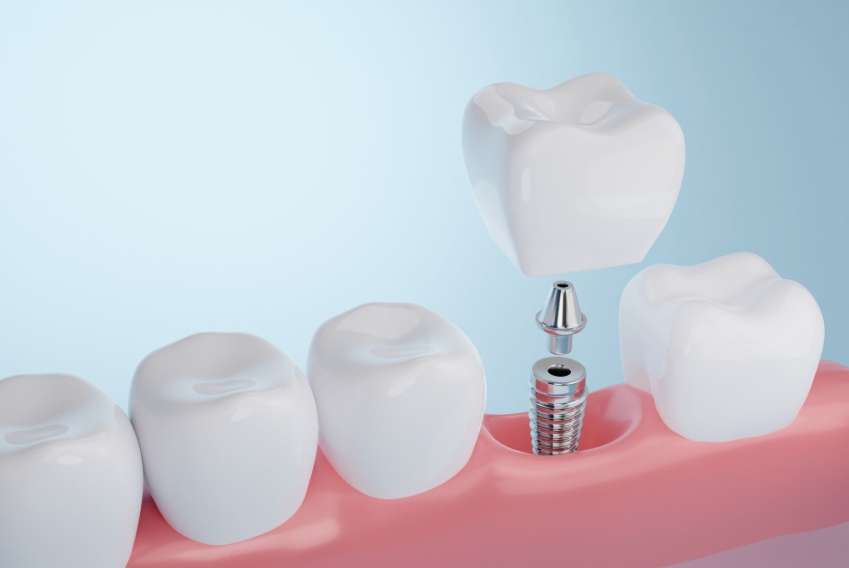
Dental implants are designed to replace missing tooth roots and provide a stable foundation for replacement teeth. Unlike traditional removable dentures, which rest on the gums, or conventional bridges, which generally rely on neighbouring teeth for support, implants are placed into the jawbone.
A typical implant restoration involves three main components: the implant fixture, an abutment and a dental crown. The fixture is inserted into the jawbone, where it may integrate with the surrounding bone through a process known as osseointegration. Once healing and stability have been assessed, the abutment connects the implant to the crown, which is designed to resemble the visible portion of a natural tooth.
This structure allows the replacement tooth to function more like a natural tooth during many everyday activities.
One of the key advantages of dental implants is that they can help reduce the need to alter healthy neighbouring teeth. A conventional dental bridge may require the supporting teeth to be prepared, whereas an implant-supported crown can often be placed independently. However, suitability depends on factors such as bone volume, gum health, medical history and the condition of the surrounding teeth.
Why Missing Teeth Can Affect Everyday Confidence
The emotional effects of tooth loss deserve the same thoughtful consideration as its physical consequences. A person who once smiled freely may begin covering their mouth, avoiding photographs or feeling self-conscious during conversations. Others may worry about food becoming trapped in a gap or feel uncomfortable eating in public.
For some individuals, these concerns are relatively minor. For others, they can influence social participation, professional interactions and personal relationships.
The phrase missing teeth can be devastating and captures an experience that is often more complicated than a change in appearance. Tooth loss can represent a disruption to familiar routines and personal identity. Someone may feel that their smile no longer reflects who they are, even when other people do not notice the difference.
Restoring a tooth does not automatically resolve every emotional concern. However, improving oral function and creating a more comfortable smile may help some people regain confidence in everyday situations. The most meaningful treatment outcomes often involve both physical comfort and a renewed willingness to participate in life without constantly thinking about a dental gap.
The Connection Between Implants and Better Oral Care
Replacing a missing tooth is only one part of maintaining a healthy smile. Long-term success also depends on daily hygiene, regular dental examinations and appropriate professional maintenance.
An implant-supported crown cannot develop tooth decay in the same way as a natural tooth because it does not contain natural enamel or dentine. However, the tissues surrounding an implant can still become inflamed or infected. A condition known as peri-implantitis may develop when inflammation affects the tissues around an implant and is accompanied by progressive supporting bone loss.
For this reason, brushing twice daily with fluoride toothpaste, cleaning between teeth and following professional advice remain essential. Special flossing techniques, interdental brushes or water flossers may be recommended depending on the restoration and the individual’s needs.
Regular dental visits allow clinicians to monitor the implant, surrounding gums, bite and neighbouring teeth. These appointments can help identify problems early and support the long-term function of the restoration.
In this sense, implants are not a replacement for oral care. Rather, they become part of a broader approach to maintaining it.
Is an Implant Suitable for Everyone?
Dental implants can be an effective option for many adults, but they are not automatically suitable for every patient. A comprehensive assessment is necessary before treatment begins.
Dentists may evaluate jawbone volume, gum health, oral hygiene, bite alignment and relevant medical factors. Where insufficient bone is present, additional procedures may sometimes be considered. Active gum disease, uncontrolled health conditions or inadequate oral hygiene may also affect treatment planning.
Smoking can influence healing and implant outcomes, making an individualised discussion with a dental professional particularly important.
The treatment process may involve several stages, including planning, implant placement, healing and restoration. The overall timeline varies according to the patient’s circumstances and whether additional procedures are required.
Understanding these stages helps patients make informed decisions rather than viewing implants as an instant solution.
Restoring More Than a Tooth
A missing tooth can change how a person eats, speaks, smiles and interacts with the world. Its impact may be physical, emotional and social, even when the gap appears relatively small.
Dental implants offer one approach to restoring lost teeth while supporting oral function and helping preserve the surrounding structures. Their benefits, however, depend on careful planning, appropriate patient selection and consistent maintenance.
Ultimately, replacing a missing tooth is not only about creating a complete smile. It is about helping people feel comfortable with the way their mouth functions and, in some cases, restoring the confidence to enjoy ordinary moments without hesitation.
A healthy smile is not defined solely by its appearance. It is also reflected in the freedom to eat, speak, laugh and care for one’s teeth with confidence.